Trypsin Platinum, Mass Spectrometry Grade
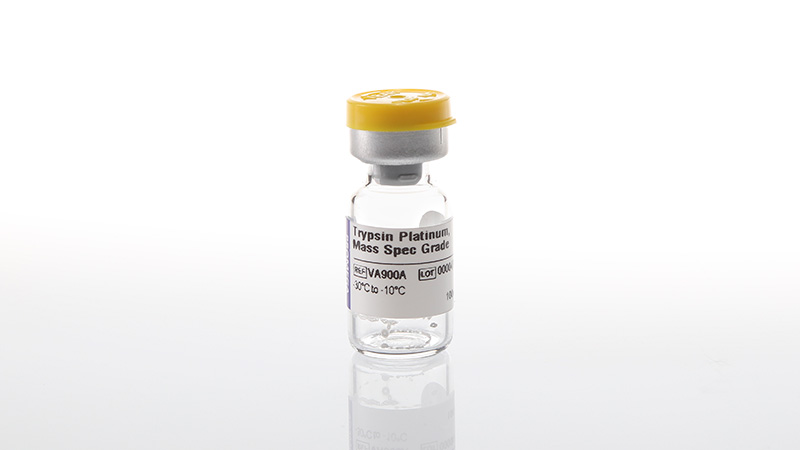
Recombinant Trypsin for Most Accurate Biotherapeutic Protein Characterization and Specialized Proteomics Applications
- Free of chymotryptic activity commonly observed in proteomic and mass spec grade trypsins
- Superior autoproteolytic resistance
- Works with any existing trypsin protocols
- Excellent lot-to-lot reproducibility
- Free of contaminating animal proteins

Catalog Number:
Size
Catalog Number: VA9000
Accurate Protein Characterization for Mass Spectrometry and RP-HPLC-UV
Trypsin Platinum, Mass Spectrometry Grade, is a recombinant protease designed for accurate protein characterization with mass spectrometry and reverse-phase high-performance liquid chromatography with UV detection (RP-HPLC-UV). It is free of any detectable nonspecific proteolytic activity. A novel chemical modification method assures maximal autoproteolytic resistance. Trypsin Platinum has high proteolytic efficiency and is free of contaminating proteins of animal origin.
Learn more about Trypsin Platinum in the Webinar "Biotherapeutic Protein Characterization: Overcoming the Challenges of Non-Specific Cleavage and Autoproteolysis".
Cleavage Specificity and Autoproteolytic Resistance
Commercially available proteomic and mass spec grade trypsin products contain nonspecific protease activity at a low but detectable level. Close analysis of this activity suggests it is chymotryptic in nature. The nonspecific, chymotryptic-like cleavage activity becomes evident if large amounts of trypsin are used in a digestion reaction (Figure 1, Panel A). These nonspecific cleavage activities compromise the quality of protein analysis. Our production procedure assures that Trypsin Platinum is free of any detectable traces of nonspecific cleavage activity (Figure 1, Panel B).
Autoproteolysis is another common negative side effect of trypsin digestion. To suppress trypsin autoproteolysis, trypsin used in protein mass spec sample preparation is chemically modified. Yet, a certain level of autoproteolysis is still observed (Figure 2, Panel A). The generated tryptic autoproteolytic peptides often compromise protein analysis, particularly if a large amount of trypsin is used in a digestion reaction. Our novel modification method further suppresses Trypsin Platinum autoproteolysis compared to the autoproteolysis observed in the currently available proteomic and mass spec grade trypsin products (Figure 2, Panel B), assuring that the level of autoproteolytic tryptic peptides remains negligibly low even if large quantities of Trypsin Platinum are used.
Trypsin Platinum Cleavage Specificity
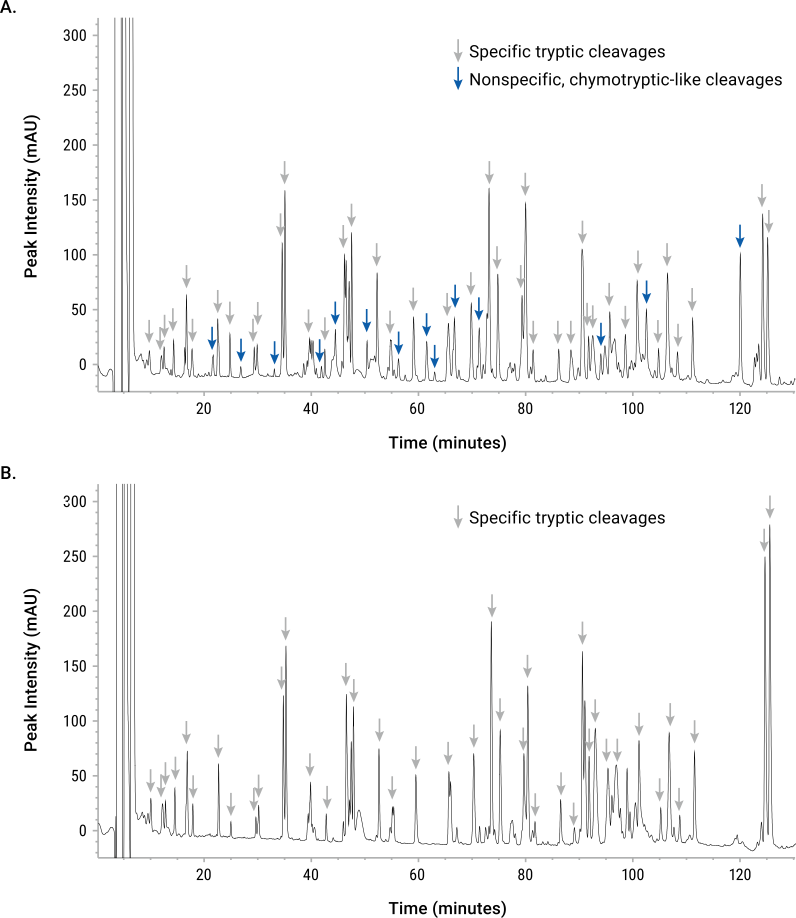
Figure 1. Comparison of nonspecific proteolytic activity between Trypsin Platinum and trypsin from another supplier. Panitumumab (Vectibix®) was used as a model protein substrate. The digestion reactions used a 1:10 trypsin:protein ratio. Digested peptides were analyzed with RP-HPLC-UV. The peptide peaks were assigned with LC-MS to differentiate between specific and nonspecific peptides. Analysis showed that mass spec grade trypsin from vendor T (used for comparison) contains prominent nonspecific proteolytic activity (Panel A). Close analysis indicated a chymotryptic-like pattern of the generated nonspecific cleavages (data not shown). In contrast, Trypsin Platinum generated specific tryptic cleavages only (Panel B).
Trypsin Platinum Autoproteolytic Resistance
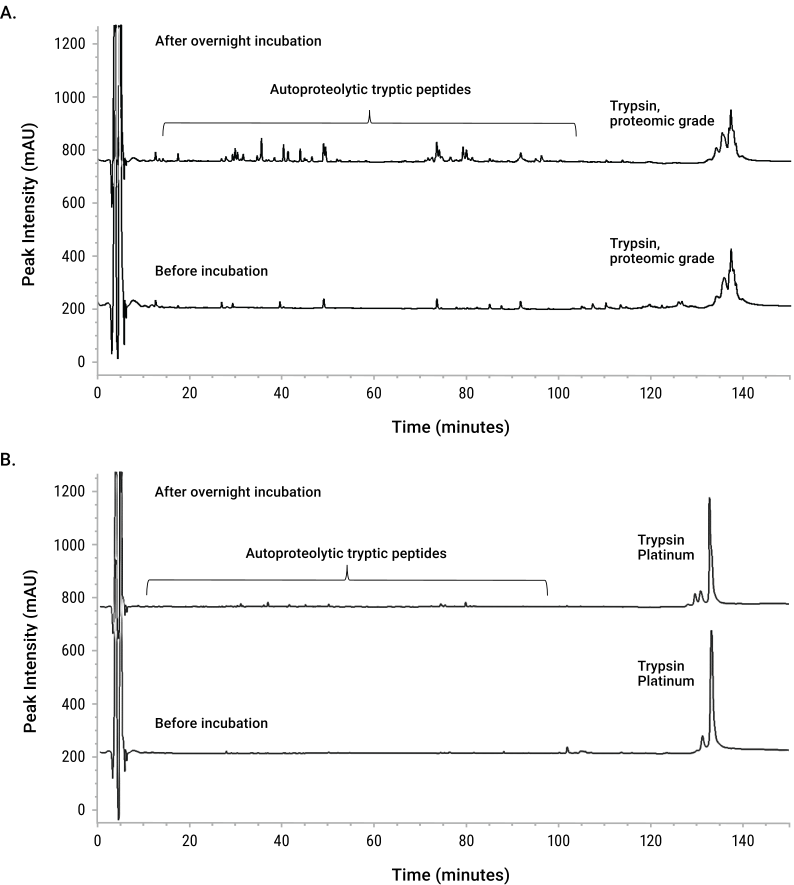
Figure 2. Comparison of autoproteolytic activity between Trypsin Platinum and proteomic-grade trypsin from another supplier. Proteomic grade trypsin from vendor S (used for comparison) and Trypsin Platinum were incubated at conventional digestion conditions. Specifically, trypsin products were reconstituted in 100mM Tris-HCl (pH 8)/2mM CaCl2 and incubated overnight at 37°C. Autoproteolytic products were analyzed with RP-HPLC-UV. Fresh, nonincubated aliquots of either trypsin were analyzed as a control. Proteomic grade trypsin demonstrated prominent autoproteolysis, whereas autoproteolysis of Trypsin Platinum was reduced to a negligible level (compare Panels A and B).

Featured Publication: Addressing common challenges of biotherapeutic protein peptide mapping using recombinant trypsin
Learn how Trypsin Platinum's high specificity, minimal autoproteolysis, and sustained activity significantly improves the accuracy and efficiency of peptide mapping in biotherapeutic proteins.
Protocols
Specifications
Catalog Number:
What's in the box?
| Item | Part # | Size |
|---|---|---|
Trypsin Platinum, Mass Spec Grade |
VA900A | 1 × 100μg |
SDS
Search for SDSCertificate of Analysis
Use Restrictions
For Research Use Only. Not for Use in Diagnostic Procedures.Storage Conditions
Resources
Related Products
Similar Products
rAsp-N, Mass Spec Grade
Cleavage site: N-terminal of Asp. Optimal pH: 6–9.
VA1160
ProAlanase (Mass Spec Grade)
An endoprotease that preferentially cleaves proteins on the C-terminal side of proline and alanine.
VA2161, VA2171
PNGase F
Catalyzes cleavage of N-linked oligosaccharides between the innermost GlcNAc and asparagine residues.
V4831
rChymoSelect™ MS Grade Protease
Recombinant chymotrypsin engineered for precise, reproducible digests in peptide mapping workflows.
VB8100, VB8200