
The 2024 contest is closed. Meet the finalists again!
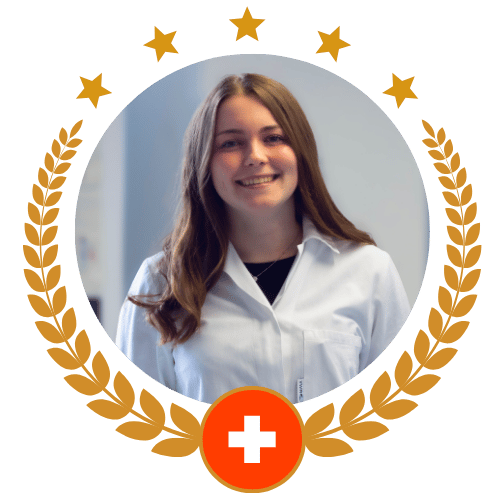
Louisa Charlotte Dury (Winner)
Translational Molecular Psychiatry, Department of Child and Adolescent Psychiatry and Psychotherapy, Psychiatric University Hospital Zurich (PUK), University of Zurich (UZH)
Research area: Neuroscience
Why should you vote for me?
Abstract
Astrocytic contributions to ADHD pathophysiology investigating dysfunction and its impact on neurodevelopment
Attention-deficit hyperactivity disorder (ADHD), the most prevalent neurodevelopmental disorder, affects 5% of children and adolescents worldwide, with up to 65% persisting into adulthood. The heritable, chronic neurobehavioral disorder ADHD includes hyperactivity, inattention, and impulsivity. Recent studies show decision-making and reinforcement learning difficulties. Neuroimaging has revealed structural and functional differences in the brains of individuals with ADHD, particularly in the frontal regions. Currently, Methylphenidate (MPH) is recognized as a first-line treatment for ADHD, improving symptoms and brain maturation. Despite its efficacy, side effects like appetite loss, headaches, anxietys and insomnia can occur. Additionally, up to 30% of patients show only partial or no response, especially in persistent adult ADHD. However, understanding the pathomechanisms of ADHD at the cellular level is challenging due to the unavailability of live patient brain biopsies, and access to postmortem samples for research is restricted.
Induced pluripotent stem cells (iPSCs) present a promising tool for directly studying human cell physiology and pathology in the affected cell-type. However, current iPSC-based ADHD research has primarily focused on neurons, disregarding the significant role of astrocytes, which constitute a substantial portion of cells in the brain. Beyond their well-known roles in regulating calcium levels and clearing neurotransmitters like glutamate, astrocytes play crucial roles in brain metabolism, providing energy to neurons, maintaining blood-brain barrier integrity, and regulating blood flow. They respond to pathological conditions by promoting immune responses through antioxidant and anti-inflammatory proteins. Additionally, astrocytes are vital for synaptic plasticity, neurogenesis, and maintaining neuronal circuits. Emerging evidence suggests a link between astrocyte dysfunction and ADHD. Studies indicate that astrocytes may influence ADHD symptoms through metabolic pathways and inflammatory responses, as well as respond positively to treatments with MPH.
Therefore, this research aims to ascertain the contribution of astrocytes to the pathophysiology of ADHD and explore potential associations between dysregulated astrocytic function and metabolic, oxidative stress, and inflammatory aberrations.
To achieve this, astrocytes will be differentiated from iPSC-derived NSCs and characterized by immunocytochemistry using S100β, GFAP, GJA1. A comprehensive analysis of A1 astrocytes (C3+, neurotoxic or pro-inflammatory phenotype) and A2 astrocytes (S100A10+, neuroprotective or anti-inflammatory phenotype), their growth rates and functionality using calcium imaging and glutamate uptake assay, will be conducted. Next, we will assess astrocyte energy metabolism, which includes mitochondrial respiration, glycolysis, and lactate production. Additionally, we will quantify mitochondrial DNA copy numbers to gain a deeper understanding of the cellular energy status. We will also evaluate oxidative stress levels and inflammatory responses in astrocyte cultures. This includes investigating the production of reactive oxygen species, superoxide dismutase activity, and the release of pro-inflammatory cytokines. Subsequently, we will evaluate whether different therapeutic approaches can rescue the potentially identified alterations between ADHD and control groups.
In summary, investigating the role of astrocyte functions and their links to metabolic, oxidative stress, and inflammatory dysregulations holds promise for identifying novel insights into the pathophysiology and treatment strategies for ADHD, potentially leading to more effective and targeted interventions for this disorder.
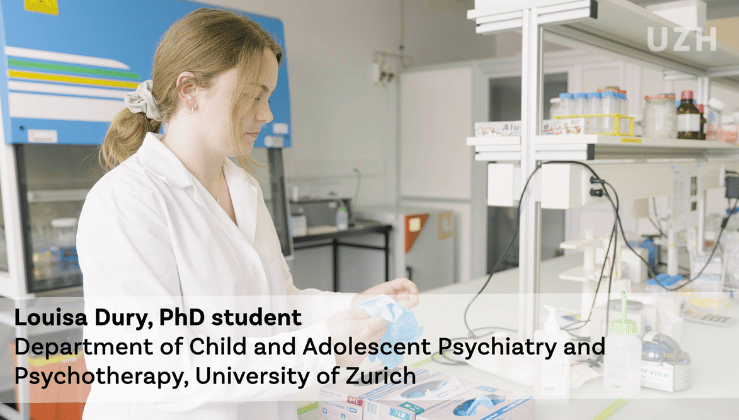
During my bachelor’s at Furtwangen University, I had the chance to dive deeply into molecular medicine through a six-month internship and bachelor thesis at the Clinical Hematology Department, University Hospital Zurich. There I had the privilege of performing examinations for genetic aberrations relevant to hematological neoplasms.
I decided to broaden my scientific knowledge and skills by studying for a master's degree in molecular cell and developmental biology at the University of Innsbruck. At the Edenhofer Lab, I found my true calling in stem cell biology and neuroscience. My master’s thesis focused on creating a cell-based model for Mucopolysaccharidosis IIIB, where I generate patient-specific neurons and organoids to explore the disease's mechanisms.
I have now started my PhD, focusing on investigating the role of astrocytes in ADHD pathophysiology, particularly their involvement in metabolic, oxidative stress, and inflammatory dysregulations.
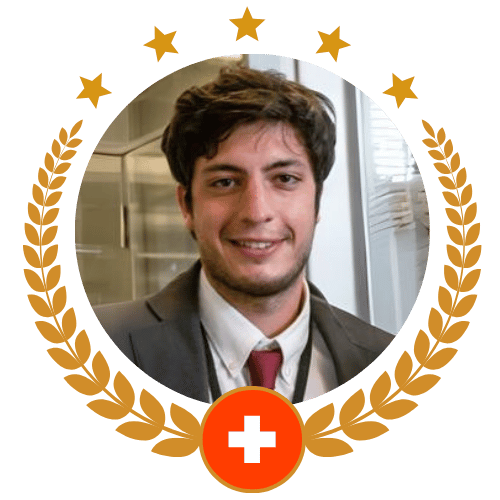
Luca Morici (Runner-up)
Institute of Pharmaceutical Sciences of Western Switzerland (ISPSO), University of Geneva
Why should you vote for me?
Abstract
Cartilage drug delivery systems for Osteoarthritis therapy
Purpose: osteoarthritis (OA) is the most common degenerative joint disease worldwide. Disease evolution in knees and hips is associated with cartilage degradation. Treatment options are only symptomatic, and no disease-modifying therapy able to stabilize or revert OA progression has passed clinical trials due to systemic toxicity and lack of cartilage targeting. In this context, our research aims to design an avidin-biotin-based drug delivery system containing kartogenin (KGN) as a disease-modifying OA drug for intra-articular (IA) administration. The drug should penetrate the cartilage's full depth to reach the chondrocytes and stimulate chondrogenesis. Cartilage has a negative fixed charge density that can be used to overcome the cartilage barrier by making drugs positively charged. We selected avidin, a positively charged protein, as a delivery system to target chondrocytes in the deep zone of the cartilage. Its nanosize should allow penetration through the cartilage’s porosity.
Methods and results: biotin-PEG2-KGN was synthesized and purified with an overall yield of 27 %. biotin-PEG2-KGN was successfully characterized by HR-MS and 1H-NMR. Four molar ratios of biotin-PEG2-KGN were necessary to displace the HABA and generate the avidin conjugate. The size and zeta potential of the globular avidin conjugate measured by DLS were 8.4 ± 3.6 nm and 18.3 ± 5.1 mV, respectively. After 24 h, 40 - 45 % of KGN was released from the avidin nanocarrier in the presence of 1 U and 100U of porcine esterase. The enzymatic kinetic was faster with 100 U, and reached a plateau after 1 week. The avidin-biotin-5-fluorescein/biotin-PEG2-KGN (1:3) positively charged showed 60 % of cartilage uptake compared to neutravidin-biotin-5-fluorescein/biotin-PEG2-KGN (1:3) and biotin-5-fluorescein (< 40 %). However, in simulated synovial fluid the cartilage uptake decreases significantly probably due to albumin or hyaluronic acid adhesion. In fact, the co-injection of the positive avidin and the negative albumin in AF4 shows an elution delay of 2 min, most probably due to the interaction between the 2 proteins. The Griess reagent system (Promega, USA) shows a reduction of nitrites produced by macrophages Raw 264.7 inflamed with LPS after 24 h of treatment with biotin-PEG2-KGN. The WST-1 assay (Abcam, UK) did not show toxicity on mesenchymal stem cells (MSCs) and human chondrocytes (hCH) up to 20 µM, which is well above the therapeutic dose.
Perspectives: an additional Lumit® IL-6 immunoassay (Promega, USA) will be realized on hCH after stimulation with IL-β in order to confirm the anti-inflammatory property of the conjugate Avidin-biotin-PEG2-KGN. An ELISA will be realized to follow the SOX 9 expression after stimulation of hCH or ATDC5 to confirm the chondrogenic properties of our compound. Finally, an in vivo study will be realized on anterior cruciate ligament (ACLT) rats’ model to investigate if the conjugate will induce cartilage joint regeneration.
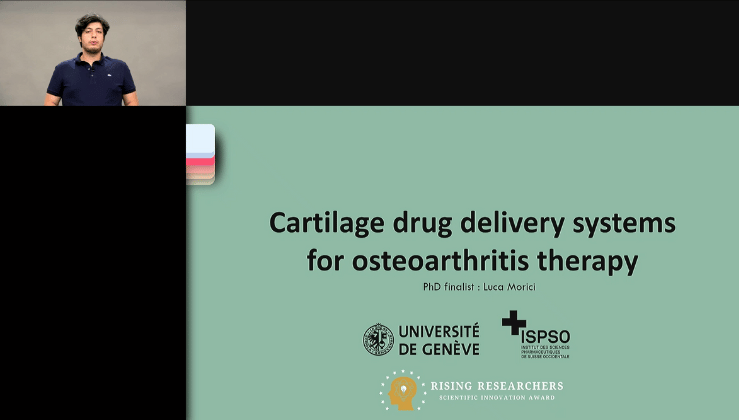
My name is Luca Morici, I’m a swiss-italian 4th year PhD student at the department of pharmaceutical technology (Univesity of Geneva) working on Osteoarthritis therapy. I was born in Sicily, Catania (Italy) and I’ve been living in Geneva since 10 years where I obtained my undergraduate bachelor and master degree. In my childhood I received a Swiss german education in the “Schweizerschule Catania” by learning and speaking in german.
I have a bachelor and a master degree in pharmaceutical technology obtained at the University of Geneva. During my master thesis In the Department of Novel Agents at Bracco S.A. I worked on the development of new contrast agents. In this moment, I’m exchange student visitor at the Northeastern University in Boston (USA) for 6 months to finalize my PhD project and to learn new scientific skills related to cartilage retention and diffusivity of delivery systems.
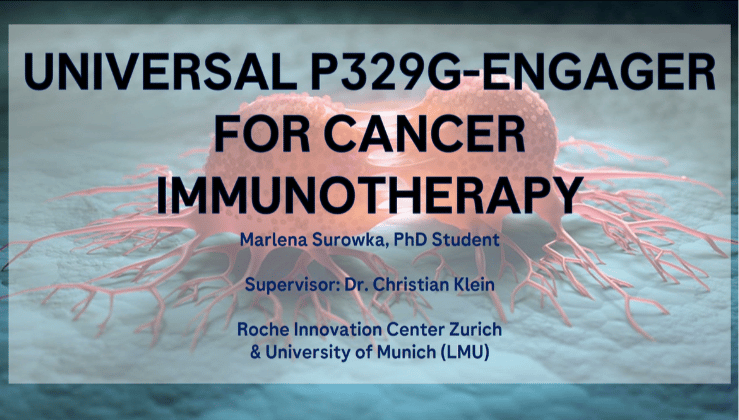
Marlena Surowka (Runner-up)
Roche Innovation Center Zurich & University of Munich (LMU)
Why should you vote for me?

Abstract
P329G-Engager: A Novel Universal Antibody-Based Adaptor Platform For Cancer Immunotherapy
Cancers remains a major cause of death around the world, with millions of deaths attributed to this disease. Recently, immunotherapy emerged as a promising treatment for patients, aiming to boost the patient’s own weakened immune cells against the tumors. Despite high success rates, many patients remain unresponsive to this treatment. Tumor heterogeneity between patients has been identified as a major roadblock to the curative potential of currently developed drugs. Therefore, personalized treatments are urgently needed to tackle this issue. However, the complexity of specific drug production for each patient, as well as high costs in molecule development pose obstacles. To address these issues, we set to develop a mix-and-match drug platform to enable adjustment of therapies to the tumor antigen and immune profile, with off-the-shelf availability and lower development costs.
For off-the-shelf availability, we established a P329G-Engager universal antibody platform for cancer immunotherapy, utilizing a two-component system. The first component consists of a library of tumor-binding adaptor IgG antibodies, to be selected based on the tumor antigen profile. The second component is a library of adaptor-binding bispecific IgG antibodies, which are immune cell engagers, to precisely target immune cell of choice within the specific tumor mass.
Multiple immunotherapeutic antibodies have been assessed clinically in oncology, enabling us to access many tumor and immune cell antibody binders that have already undergone in-depth pharmaceutical characterization. Many of these antibodies bear P329G mutation in their Fc part to avoid unwanted immune fratricide, and due to that, a plethora of tumor-binding P329G-mutated IgGs have been produced n the past.
Therefore, we decided to exploit this and use these anti-tumoral P329G mutated-IgGs as antigen-targeting adaptors. For the immune-engaging component, we used clinical-stage antibodies engaging T cells, NK cells, and costimulatory or cytokine receptors. With a goal of connecting the two, we designed the immune engagers to be bispecific to both adaptors and immune cells. To this end, we developed a novel antibody binder recognizing the P329G mutation, and added it to the structure of immune effector molecules, resulting in new P329G-Engagers.
We show preclinically that P329G- and T cell- bispecific antibody (P329G-TCB) induces tumor cell killing in vitro by human immune cells across a set of adaptors selected for different tumor types. These include lymphoma, prostate, stomach, ovarian cancers and more. Antitumoral efficacy in vitro was also achieved when combining the adaptors with P329G-binding NK cell engagers, CAR-T cells, T cell costimulators or immunocytokines. By various methodologies, we observed P329G-Engager-mediated Jurkat T cell activation and costimulation (Promega, custom cell lines), antitumoral cytotoxicity (Promega, Cytotox-Glo, G9291) and LDH release (Promega, LDH-Glo, J2381). P329G-TCB also achieved tumor control in vivo in a mouse model of gastric cancer. With this data, we provided evidence of the mix-and-match principle for cancer immunotherapy in the preclinical setting.
Providing that further research is continued, a platform like the P329G-Engager one could offer previously unavailable combination of off-the-shelf therapy with tumor personalization. Additionally, basing our platform on clinical-stage molecules, the costs of drug development can be reduced.
About Rising Researchers
The Promega Rising Researchers Award is a global contest for PhD students, awarding the most innovative research projects with a trip to Promega's headquarters.
The award aims to empower and recognize you and your scientific contributions and academic journey as a PhD student. Scroll down to find out more about the Terms & Conditions and how to submit your research abstract.
This is the Switzerland branch page. See all participating countries on the Rising Researchers Award global page.

Awards
Grand prize wins a trip to Promega headquarters in Madison, WI USA to meet our R&D team, present your projects and go behind the scenes of a life science company. One winner from Switzerland joins a group of global winners on the trip.
2nd and 3rd places receive a giftbox full of Promega goodies.
Public votes are cast between October 15th and November 15th, 2024 for each nominee. The candidate with the most votes in Switzerland wins.
 Submit Your Registration Form
Tell us a little about yourself
The deadline to enter the Award is Sunday, June 30th, 2024. No submissions will be accepted after this date.
Each Award applicant (“Applicant”) will be notified if they were selected as an Award finalist (“Finalist”) no later than July 31st, 2024.
Each Finalist will be notified if they were voted an Award recipient (“Recipient”) no later than December 6th, 2024.
Each Applicant will be asked to enter the following information when submitting their entry for the Award:
- Contact Information: First name, last name, institutional/academic e-mail address, telephone, job/role, institute/university name, lab name, street address, city, state/province (as applicable), postal code/ZIP, country.
Complete the Application Form
Share your abstract and project impact
- Abstract: In 500 words or fewer, the Applicant provides a brief description of a research project they are currently involved in. The abstract should state the project’s goals and the Applicant’s specific contributions, and be specific about the lab techniques employed and results obtained.
- Relevance: In 200 words or fewer, the Applicant should explain their motivation for applying and why they believe that their project should be selected for the Award.
Applicants are advised to review the internal policies of their respective organizations, as these policies may prohibit the receipt of incentives or require prior authorization for contest participation.
Applicants must be aware that their submitted abstract will be shared publicly on the Promega website if they are selected as a Finalist. Therefore, when applying, applicants should carefully consider the level of information permitted by their organization.
 Review and Finalists Selection
Top 3 Finalists in Switzerland
(Selected by Promega Switzerland Representatives)
Three (3) Finalists from Switzerland will be selected through a vetting process involving Promega Switzerland employees (the “Selection Committee”) based on the information submitted in the application form. Each Finalist will be notified by email at the sole discretion of Promega Switzerland, no later than Wednesday, July 31st, 2024. Promega Switzerland reserves the right to decline any submission that does not meet the expected standards of research carried out in Swiss organizations and institutions, or is not relevant to the specific topic.
 Voting
Voters must have an academic domain e-mail address
(Finalists can promote their videos to collect votes)
All Finalists selected by the Selection Committee will be asked to submit additional information such as a profile picture and answer questions about their scientific background and interests. Finalists will also be asked to prepare a video of up to 3 minutes detailing their project. This information will be made available on Promega’s website, along with a form that will allow other academic researchers to vote for one Finalist of their choice.
To be considered, each person entering a vote (“Voter”) must fulfill the following two requirements:
- The Voter must be affiliated to an academic institution in Switzerland.
- The Voter must provide a valid academic e-mail address, that is, an e-mail with an academic domain, such as @epfl.ch, @uzh.ch, etc.
One Finalist receiving the highest number of votes will be declared the Recipient of the Award for Switzerland, and will be notified by e-mail at the sole discretion of Promega, no later than Friday, December 6th, 2024. Should the Recipient be unable to receive their prize for any reason, the prize may be awarded to an alternate Finalist or not awarded at all, as determined by the Promega Selection Committee.
 Awards
The finalist with the most votes in Switzerland wins
(Grand prize trip to Madison, WI to meet our R&D)
The Recipient will be awarded one visit to Promega Headquarters in Madison, Wisconsin (USA), with covered expenses including round-trip transportation (economy flight, second-class SBB/tram/bus) from the Recipient’s place of residence, and accommodation and meals throughout their stay. All Recipients from participating Promega Branches will participate in the same visit, the date of which will be determined in agreement with the Recipients group and with adequate notice in advance. During this visit, Recipients will participate in activities such as tours of Promega buildings and labs, one-on-one discussions with Promega scientists, lab trainings, workshops, and other activities aimed at the Recipients’ academic development.
Promega Switzerland is not responsible for, nor will it cover, any of the costs related to US Visa applications. It is the Recipient’s responsibility to make sure they are in possession of all valid travel documents at the time of their visit to Promega Headquarters.
Recipients are required to obtain comprehensive, health, accident, travel and personal liability insurance prior to participating in any activities associated with the Award. This insurance must cover medical needs, potential injuries, travel-related incidents as well as any liability issues, ensuring recipients are fully protected during their involvement in the Award program. Promega Switzerland considers this insurance a crucial step for the safety and security of all participants.
Additional expenses incurred by individual choice of each Recipient, such as activities and purchases outside of the visit schedule, will not be covered by Promega.
Finalists who are not selected as the main Award Recipient will receive a giftbox containing Promega branded goodies.
By submitting their application for the Rising Researchers Award, the Applicants will be asked to share information or data collected for marketing or commercial purposes. In addition, the Recipient agrees to:
- Share their research stories with Promega in the months following the receipt of the Award.
- Support promotional activities at Promega’s request for 12 months following accepting the Award, which could include, but is not limited to: interviews, webinar presentations, website story features, videos, photoshoots, blogging, data sharing, and/or presenting at conferences or seminars. This content will be shared on the Promega website (www.promega.com), the Promega blog (www.promegaconnections.com) and Promega social media accounts including Facebook, Instagram, LinkedIn and X.
Recipients must acknowledge Promega in scientific publication(s) authored by the Award Recipients related to the research performed and supported by the Award.
A detailed consent form will be provided that allows Finalists and the Recipient to choose which information they are willing to share and through which channels.
In case of a dispute regarding the identity of the person submitting an online entry, the entry will be deemed to be submitted by the person in whose name the e-mail account is registered. Recipients may be required to provide evidence that they are the authorized account holder of the e-mail address associated with the selected entry. Return of any Award notification as undeliverable will result in forfeiture of the prize.
Entry information shall be the property of Promega. No prize transfer or cash redemption will be permitted. No prize substitution will be permitted, except by the sole discretion of Promega, in which case a prize of comparable or greater value may be awarded.
Promega reserves the right to substitute any award of equal or greater value or to cancel, suspend, and/or modify the Award at its sole discretion.
By participating, Applicants agree to abide by and be bound by the rules and decisions of Promega which shall be final in all respects relating to this Rising Researchers Award, including without limitation the interpretation of this rule. Participants agree to release, discharge and hold harmless Promega, and their subsidiaries, affiliates, officers, directors, agents, representatives, and respective employees from any and all claims, charges, injuries, liability, losses and/or damages of any kind resulting from or arising out of participation in the Rising Researchers Award and/or the acceptance, use, misuse or possession of any products received through the Rising Researchers Award. Recipients of this Award will be ineligible for future Rising Researchers Awards.