Promega Art Contest for Creative Scientists
“The most beautiful thing we can experience is the mysterious. It is the source of all true art and science.”
Albert Einstein
Thank you for verifying your email address.
There was an issue verifying your email address. Please try again or contact Customer Service.
Promega Art Contest for Creative Scientists
“The most beautiful thing we can experience is the mysterious. It is the source of all true art and science.”
Albert Einstein
The collection of 11 artworks selected by the Jury of Dr. Martin Oeggerli, Figure 1.A., and Dr. Joanna Stevenson.
Using DNA, scientists engineered tri-symmetric molecules that self-organize into hexagonal networks, where nano rigidity of the DNA dominates the size and order of the structure. This understanding has broader implications for natural hexagonal structures found in viral combat and cellular entry. The Origami II artwork captures a snapshot of this dynamic process using China inks, gel inks, embroidery, and an experimental print of DNA origami nanoparticles on wood and epoxy casting. It reflects a journey through the hexagonal pattern, where sensation takes precedence over intellectual reflection.
Scientific contributors: Cem Tekin, Vincenzo Caroprese and Professor Maartje Bastings, Programmable Biomaterials Laboratory (PBL), EPFL
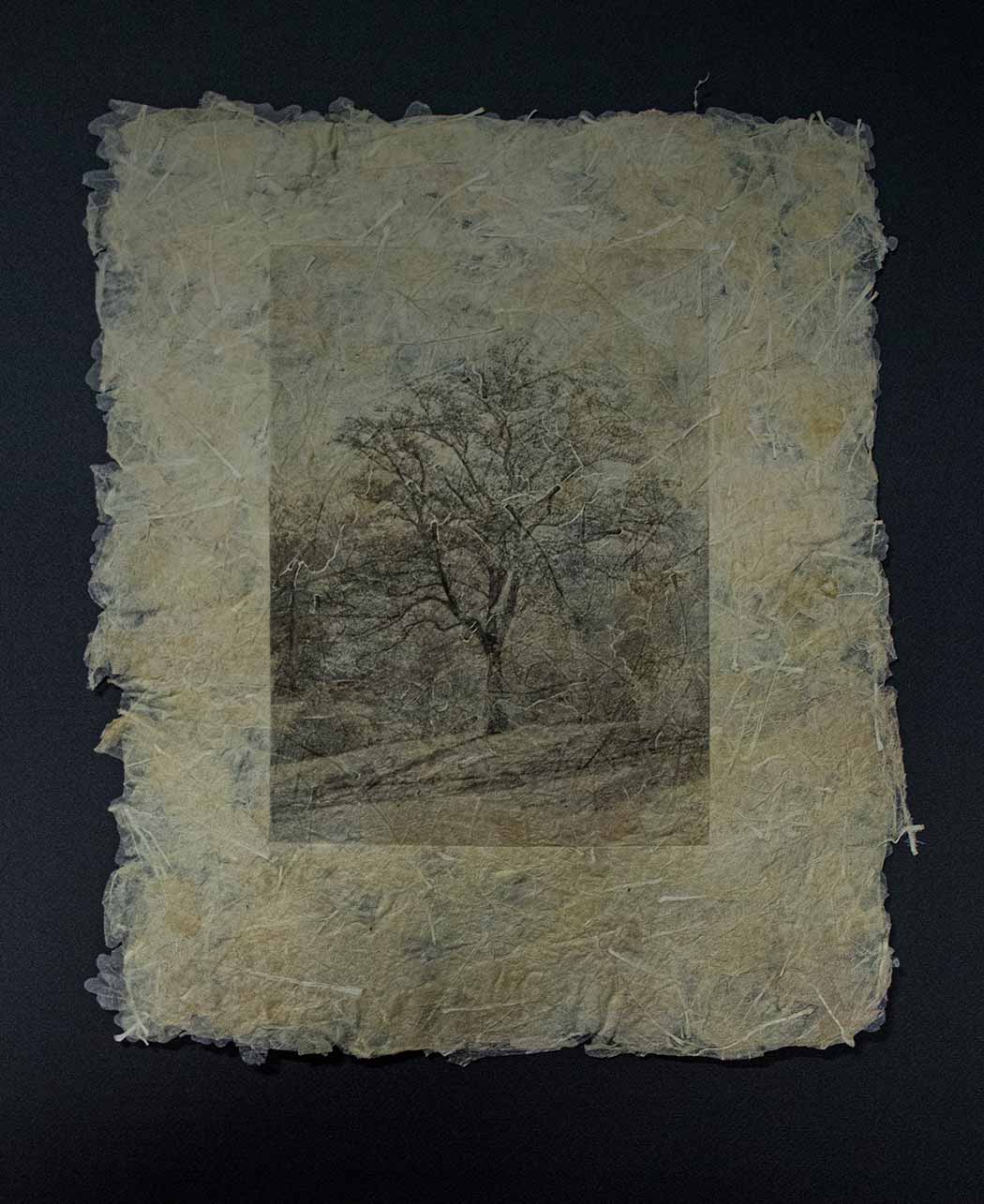
This artwork is a demonstration of using local resources to create an image, exploring the independence of supply chains and electricity. The image of an oak tree is printed on a paper sheet made from the tree's leaves using ink made from the same leaves. The process involves extracting cellulose from the leaves to make paper, charring and milling them to make ink, and chemically etching the image onto a copper plate, which is then printed using a hand press. The artwork aims to show that local resources can be used to create an image, highlighting the issue of dependencies on electricity and supply chains.
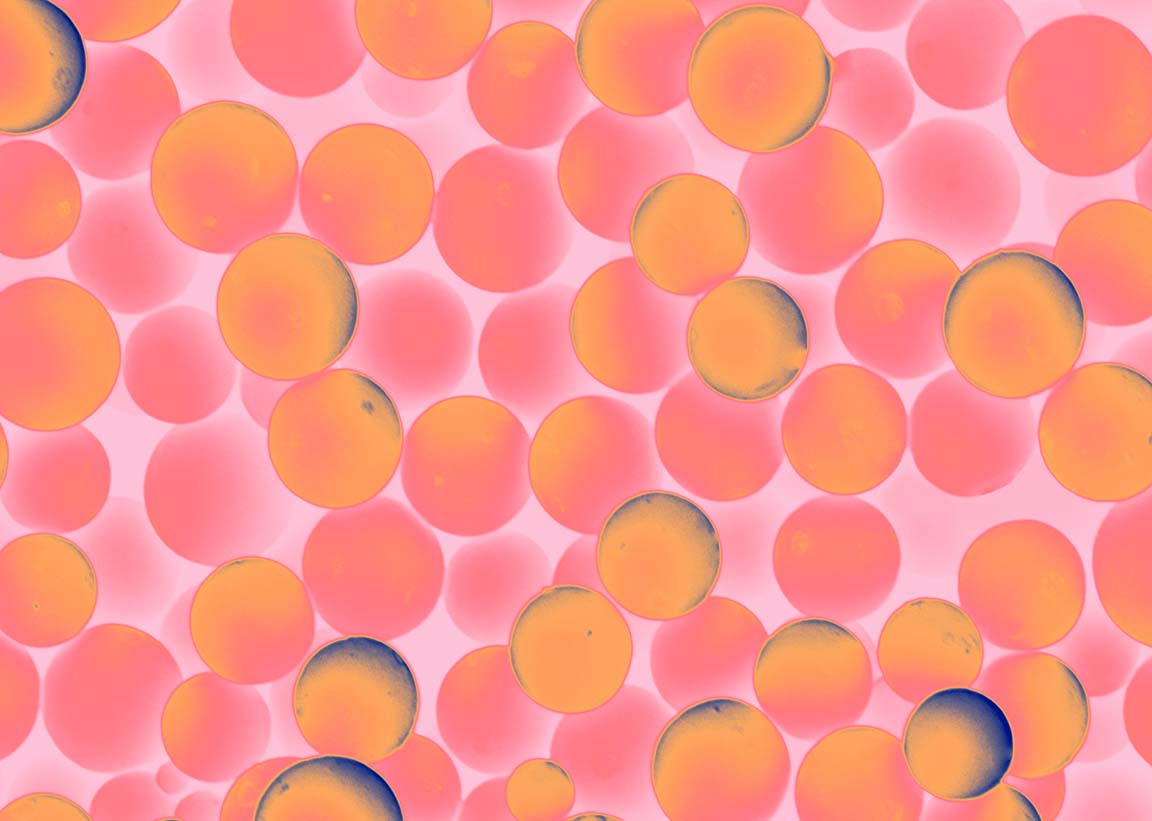
This is a scanning electron microscope image of the carbon material, which is used as an anode material for metal-ion batteries. The carbon spheres are 1 micrometer in diameter, and can reversibly intercalate Na and K ions between them. This characteristic is strongly dependent on morphology - the better carbon spheres look, the better they work.
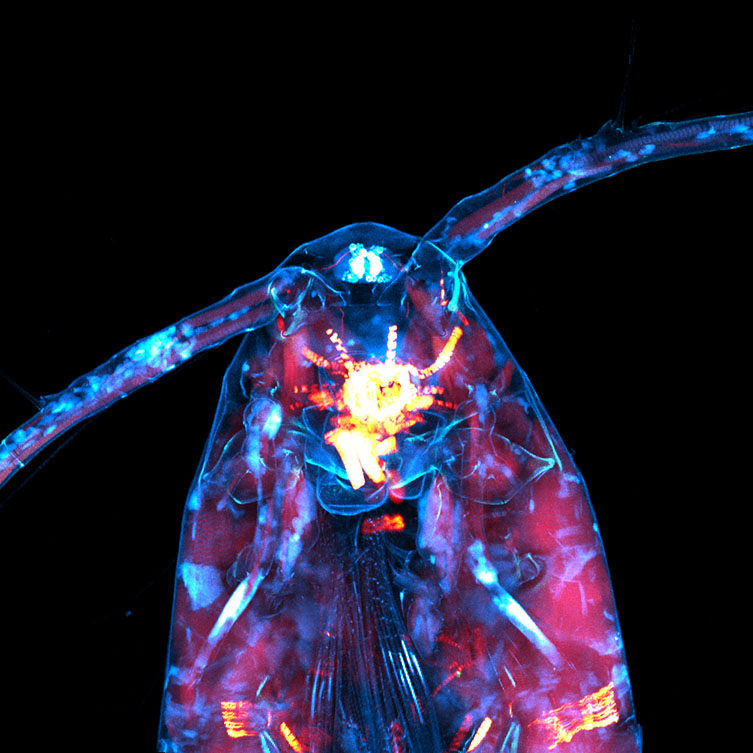
This is an image of a copepod head stained with phalloidin, which marks actin in muscle fibers and axons, analysed during a marine biology course in September 2021. Despite the long gap between staining and imaging, the result is surprisingly good and shows the copepod in great detail, revealing its internal structures such as a commissure behind the eye and muscle fibers on the side. The image is highly collaborative in nature and was created in collaboration with Dr. Jules Duruz and a group of students during a course.
Scientific contributors: Dr. Jules Duruz and Charlotte Suter
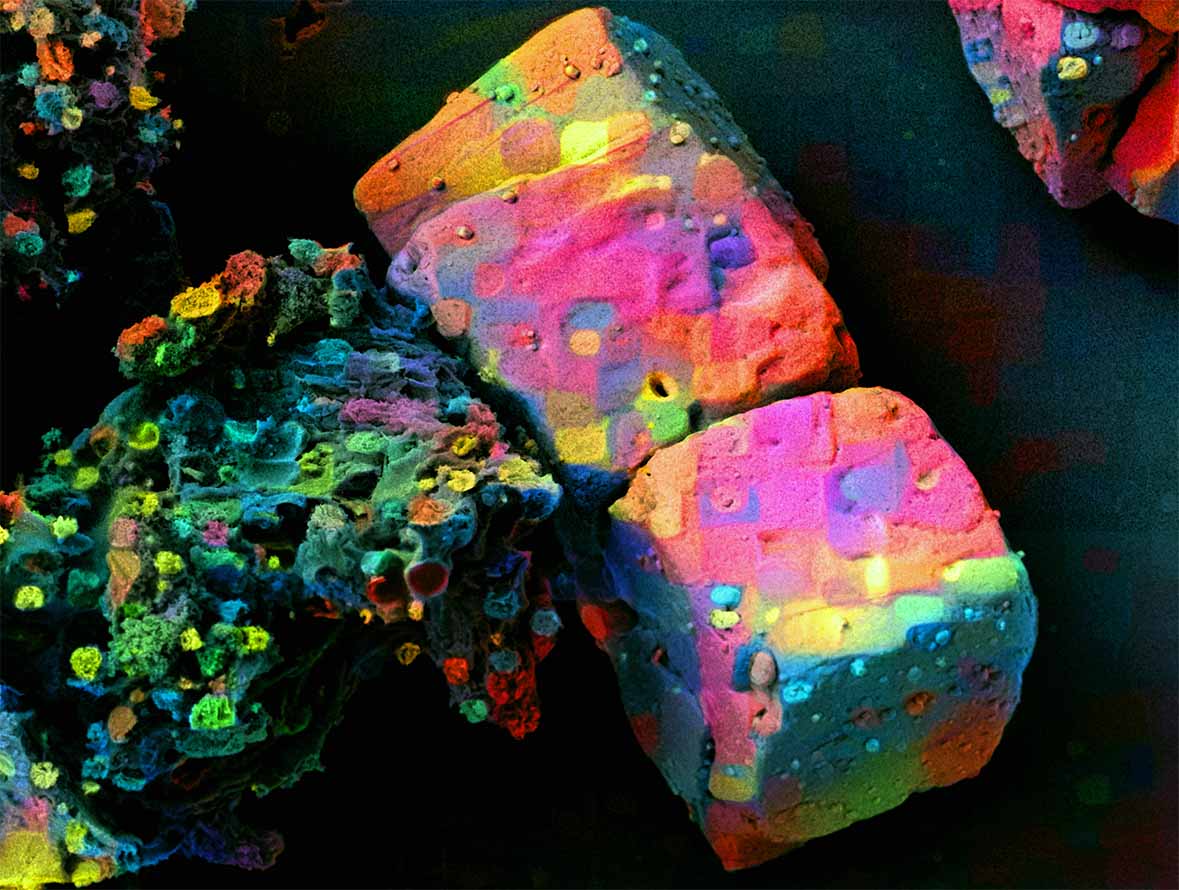
Sometimes one needs a little bit of spice in life. Salt and Pepper are the perfect duo to bring the flavor. This unique blend of NaCl and freshly ground pepper is not only a boost for senses but also a visually stunning formation, as shown in this image captured with a scanning electrone microscope. Salt and pepper is a combination very often seen on dining tables. However, it's quite rare to see both in detail in the same image.
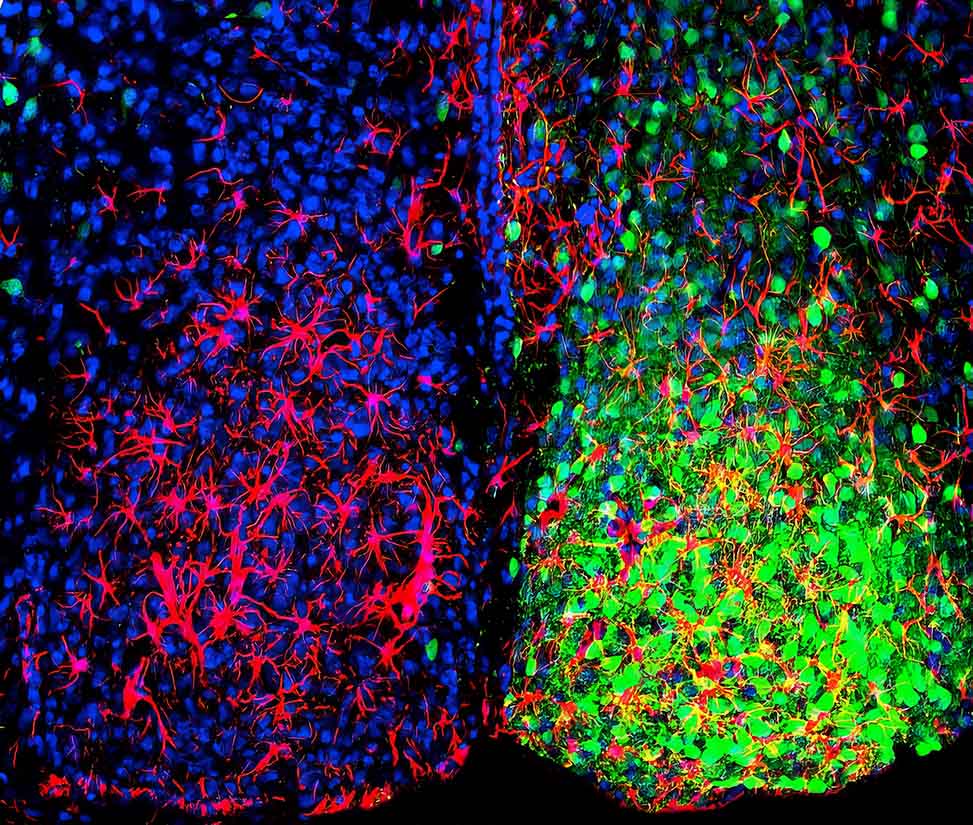
A mouse brain was sliced using a cryostat and stained with antibodies specific to astrocytes (red) and virus (green), while DNA was stained blue. Serial images were taken while shifting the plane of focus, and overlaid to create a clear photo of the suprachiasmatic nuclei (SCN), the central oscillator of the circadian clock that regulates the sleep-wake cycle. Chronic disturbance of the SCN can cause depression, obesity, and cancer. The resulting image resembles paintings by Sam Francis, with a black background instead of white. Diluting antibodies, optimizing background staining, and preventing colorant bleaching were challenges in producing the image.
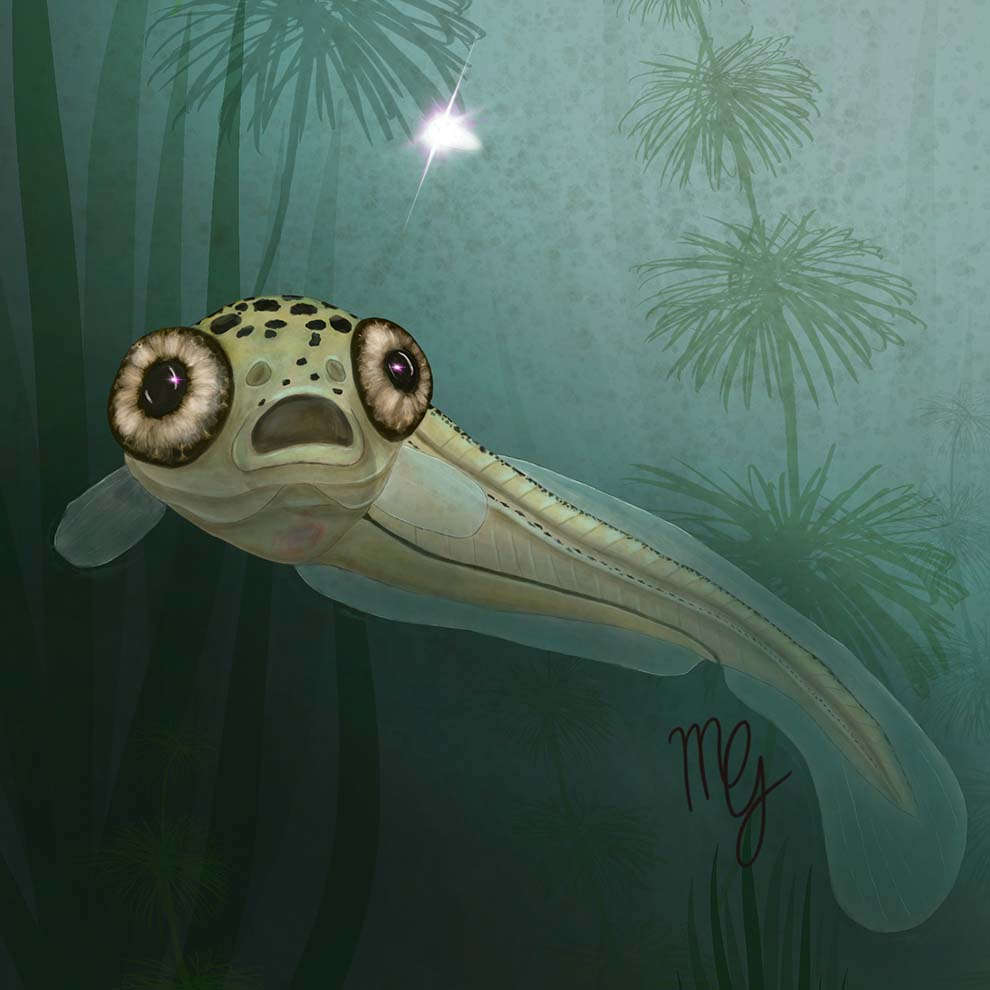
This digital painting depicts a zebrafish larva detecting a UV-reflecting paramecium, based on the artist's own research into zebrafish larvae's ability to detect prey using high sensitivity to UV light. Created on an iPad Pro using the Procreate software, the piece uses digital brushes to give the illustration a sense of realism and a painting feeling. One of the challenges was to render the semi-transparency of the larva while keeping its features visible and to represent the pigmentation of the zebrafish eye. The artwork celebrates the beauty of nature and the artist's fascination with animal behavior as both a scientist and an artist.
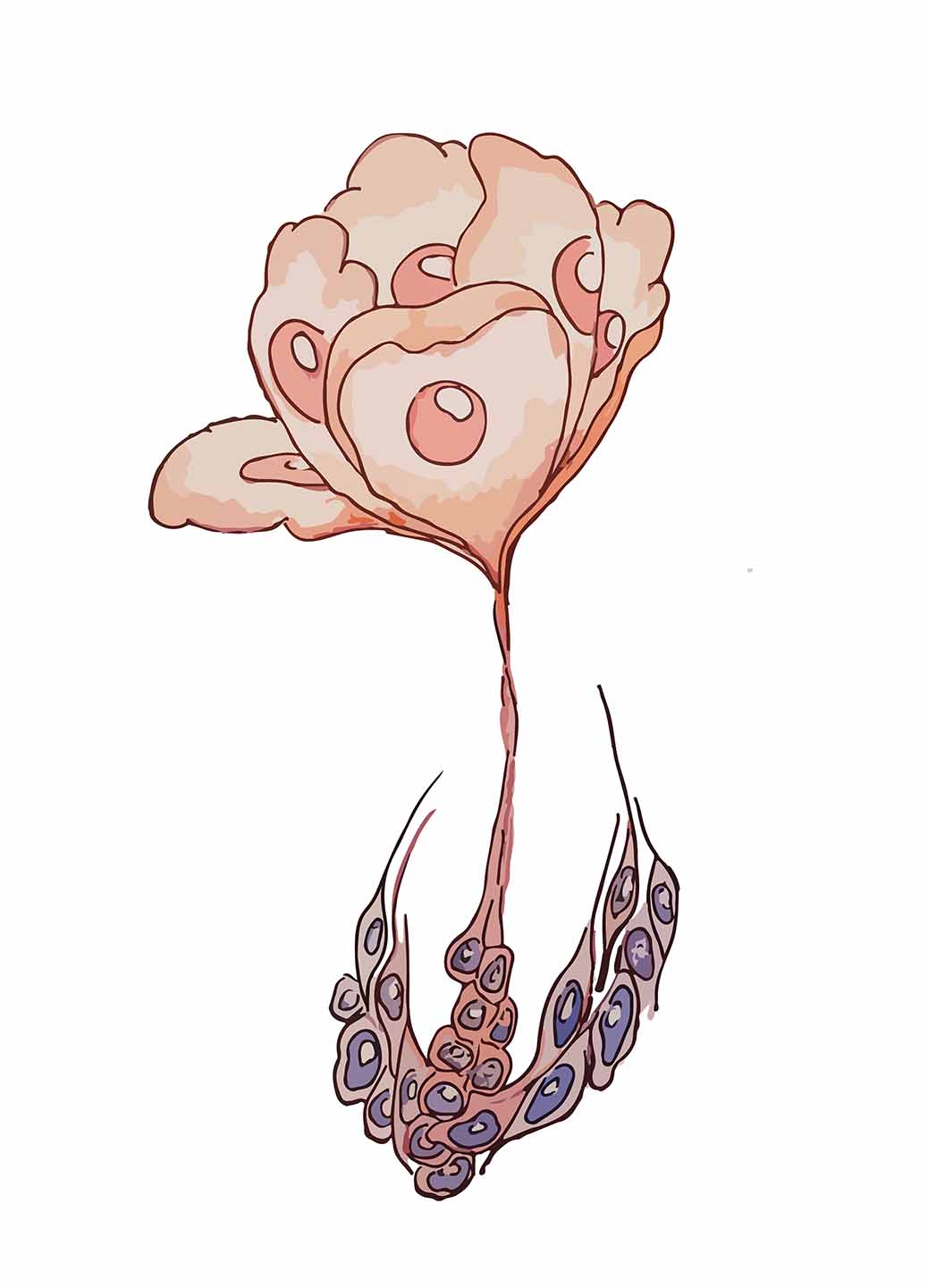
The artist aimed to create a symbol for lineage plasticity, showing the process of cells transforming into a different line, while highlighting growth and development, as well as danger in oncology. A mixed media approach of aquarelle colors and fine liner was used, with different cell morphologies and a color gradient from blue to red to represent genomic backgrounds. The artwork depicts a flower blossoming to signify the process of lineage plasticity, which is essential for development, tissue repair and homeostasis, but can also be hijacked by cancer cells, resulting in limited therapy options and lethality.
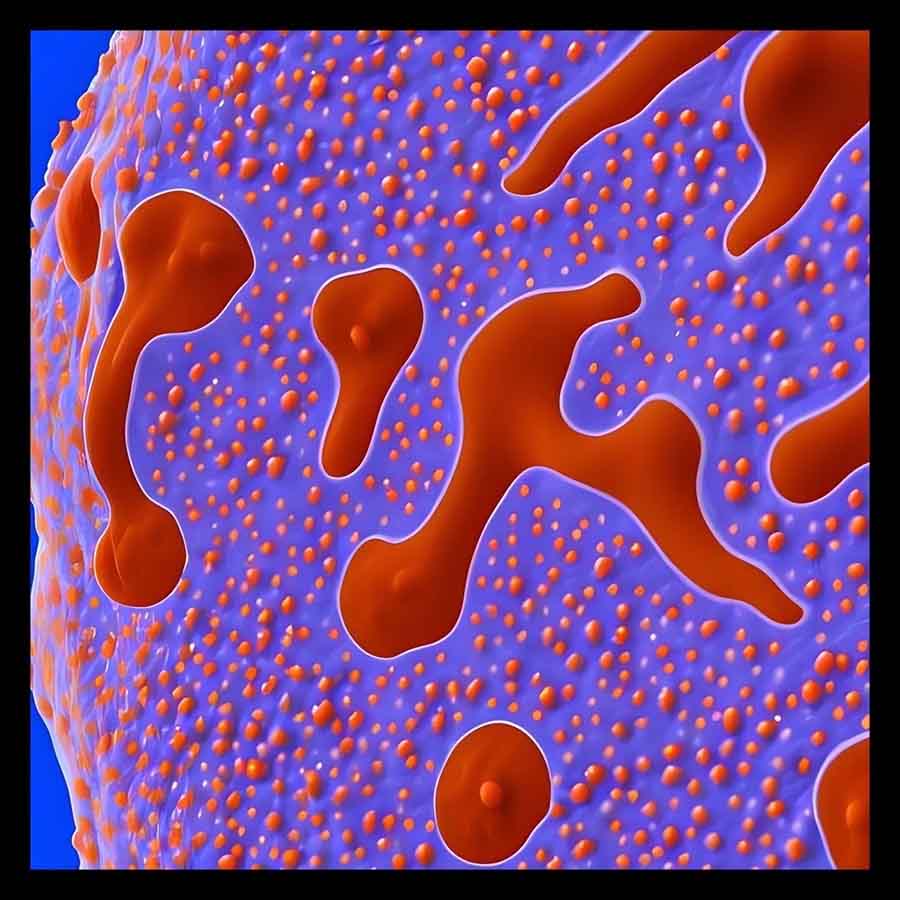
The author, driven by a fascination of the human mind and consciousness, loves to experiment with AI in his artistic process to show the interconnectedness of art and science. Reminiscent of a biological surface, "Mother Mucosa" was created using artificial intelligence tools like DALL-E 2 and Stable Diffusion inspired by an image of gut mucosa taken in fluorescent microscopy.
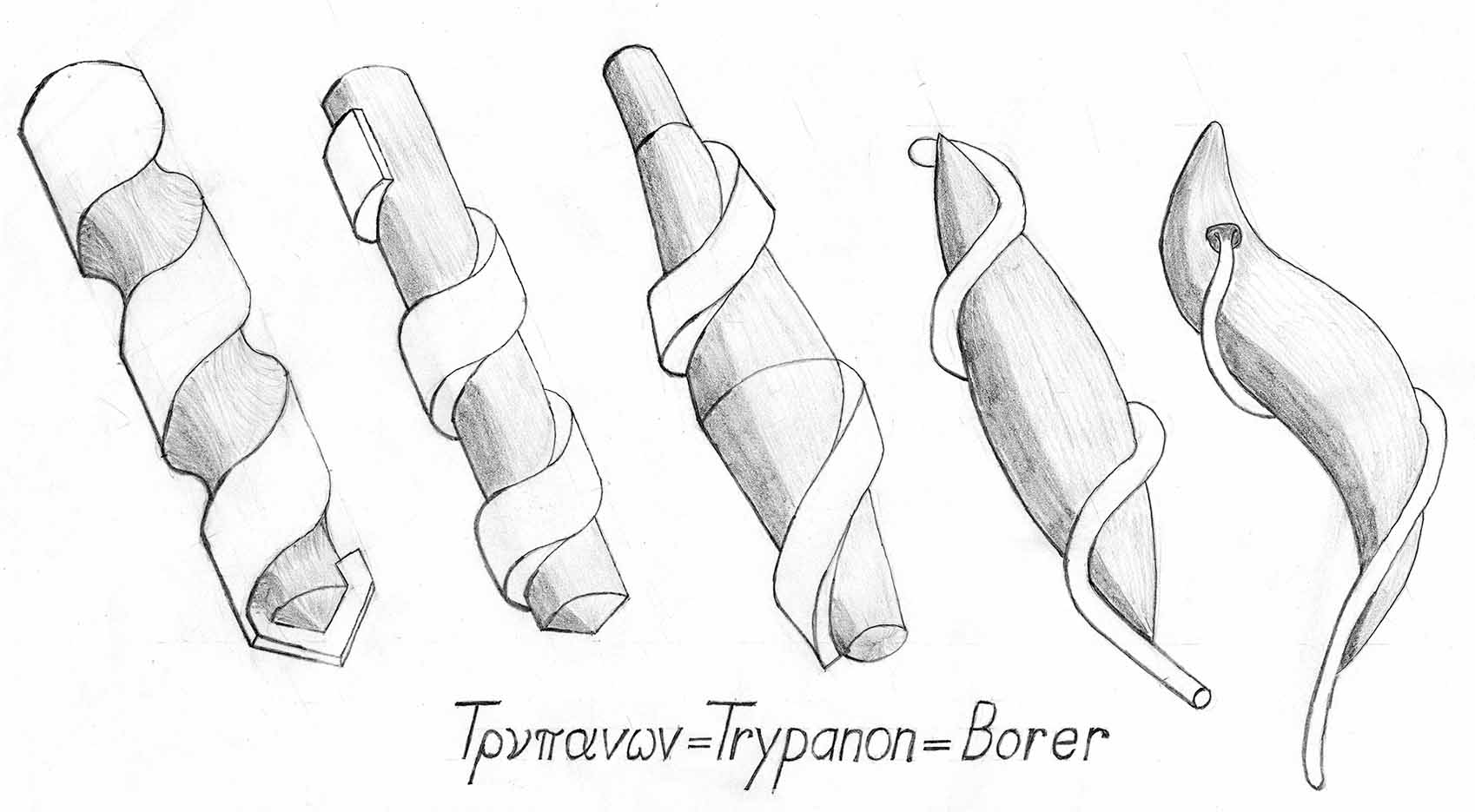
The author and his team have been working with Trypanosoma brucei for over 30 years. The etymology of the genus name inspired the creation of a pencil drawing showing the hypothetical metamorphosis of a drill into a Trypanosoma brucei cell. The drawing depicts different stages of this transformation and was a challenge due to the need to draw a convincing drill. The drawing is an artistic interpretation of the genus name "Trypanosoma," which derives from the Greek word "trypanon", meaning "drill".
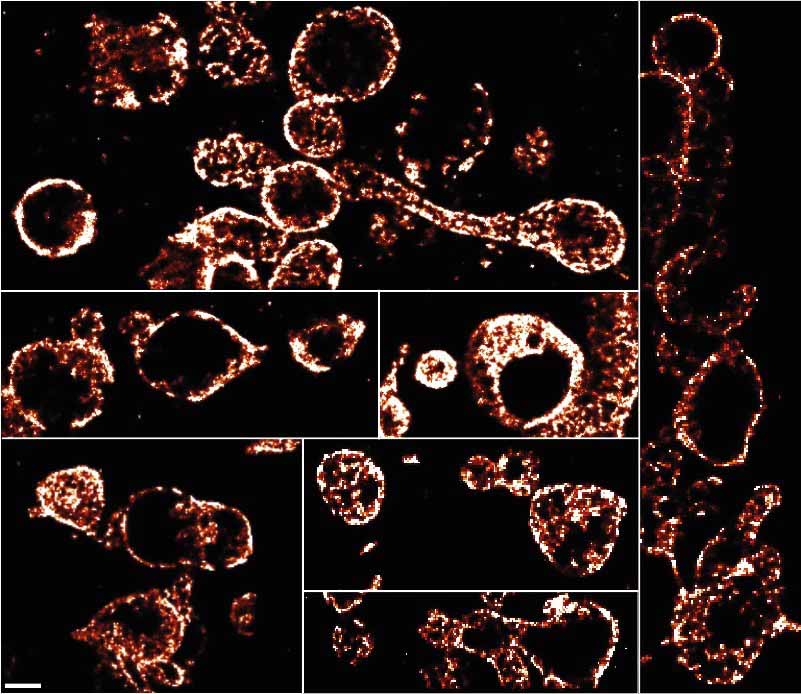
DNA-PAINT is a technique that allows for the visualization of subcellular organelles and their structures by bypassing the diffraction limit of light. The acquisition of a single image takes around 2-4 hours. The presented artwork is a collage of super-resolution images taken with a nanoscope of a mitochondrial import receptor subunit TOM20 homolog. The sample was stained using immunocytochemistry, resulting in a clear circular outline of the mitochondria, revealing their true form.
Head of Marketing at Promega Switzerland, Knitwear designer and multi-crafter
Swiss photographer specializing in scientific microscopy and fine art
The Promega AG Art Contest for Creative Scientists (the “Art Contest”) is open to scientists who are at least 18 years old and are affiliated to a life science-related institution in Switzerland. The Art Contest is limited to one entry per person that has not been previously submitted to an Art Contest held by Promega or have received a prize in an art competition organized by any other entity. All Art Contest submissions must be submitted in a digital format using the online entry form. The submissions consist of the artwork and the descriptive document about the artwork and the techniques used.
As an eligible scientist, you must complete the entry form on this website and upload a digital image of your Art Contest submission prior to February 19, 2023, 11:59 pm Zurich time (the “Deadline”). The digital images can be submitted in PNG or TIFF format with a maximum size of 10MB with the highest resolution possible (not up-RESed). Digital touch-ups are permitted. Should your artwork be selected to be part of the collection (see below) you might be requested to deliver the image in highest resolution and image size possible. Art works created in collaboration between scientists and artists (or other professions) can be submitted, however only the scientist will be assigned as the author of the artwork. The contributors to the artwork should be mentioned in the artwork description. Only the first digital image submitted by the scientist by the Deadline with a completed entry form will be entered into the Art Contest (“Art Submission”). No Art Submissions will be accepted after the Deadline or in a wrong format. You must provide a valid email address affiliated to your institution as part of your entry form.
Please consider that your organization’s internal policy may not allow you to receive prizes or may require your employer’s permission before you submit an entry into the contest. You are solely responsible for compliance with your employer’s policies.
Employees of Promega AG and their immediate family members (spouses, parents, children, siblings and their respective spouses, regardless of where they live) are not eligible to enter the Art Contests.
All Art Submissions will be reviewed by a panel of judges presented on the current contest landing page, and a collection (“Art Collection”) will be created out of selected Art Submissions (that become “Art Images”). A grand prize winner and two runners-up will be selected within the Art Collection. The grand prize winner will receive a special recognition trophy designed by Martin Oeggerli and have their work displayed in an Art Exhibition (should an exhibition be organized). The grand prize winner and the two runners-up will receive winners’ certificates and dedicated copies of the album “Micronavigating Between Art and Science” by Martin Oeggerli. The Art Collection will be presented in a virtual exhibition on Promega.com. Please note that we will not link the entries in the virtual exhibition to any external sources/landing pages. We can, however, refer to the source in the text describing the artwork.
By participating, you warrant that all information provided is accurate, that you are the lawful owner of all intellectual property associated with your Art Submission, and that your participation in the Art Contest does not violate any applicable laws or regulations. Promega AG reserves the right to request proof that your Art Image is your original artwork created solely by you. Non-compliance with this rule may disqualify you from the Art Contest.
By participating, all entry information submitted by you as part of the Art Submission becomes property of Promega AG. You retain title and ownership of the Art Image but hereby grant Promega AG a non-exclusive license, irrevocable, royalty-free license to use the Art Image as described herein and to reproduce images of the Art Image in association with display, advertising, promotions, and/or marketing of the Promega AG Art Exhibition, at Promega’s discretion.
No prize transfer or cash redemption is permitted. No prize substitution is permitted, except by the sole discretion of Promega AG, in which case a prize of comparable or greater value will be awarded. You are solely responsible for paying all federal, cantonal, and local taxes on any prizes.
By participating, you agree to abide by and be bound by the rules and decisions of Promega AG which shall be final in all respects relating to this Art Contest, including without limitation to the interpretation of these rules. You agree to release, discharge and hold harmless Promega AG, affili¬ates, and their officers, directors, agents and representatives and their respective employees from any and all claims, charges, injuries, liability, losses and/or damages of any kind resulting from or arising out of your participation in the Art Contest, your violation of any third-party rights, and/or your acceptance, use, misuse or possession of any prize received through the Art Contest. Promega AG affili¬ates, and their officers, directors, agents and representatives and their respective employees are not responsible and shall not be liable for: (a) late entries for any reason; (b) any disruption, delay, modification, or discontinuance of the Art Contest and/or your Art Submission; or (c) your participation in the Art Contest. Promega makes no warranties of any kind in association with the Art Contest.
If, for any reason, the Art Contest is not capable of running as planned, because of causes beyond the control of Promega AG, Promega AG reserves the right, in its sole discretion, to cancel, terminate, modify, or suspend the contest.
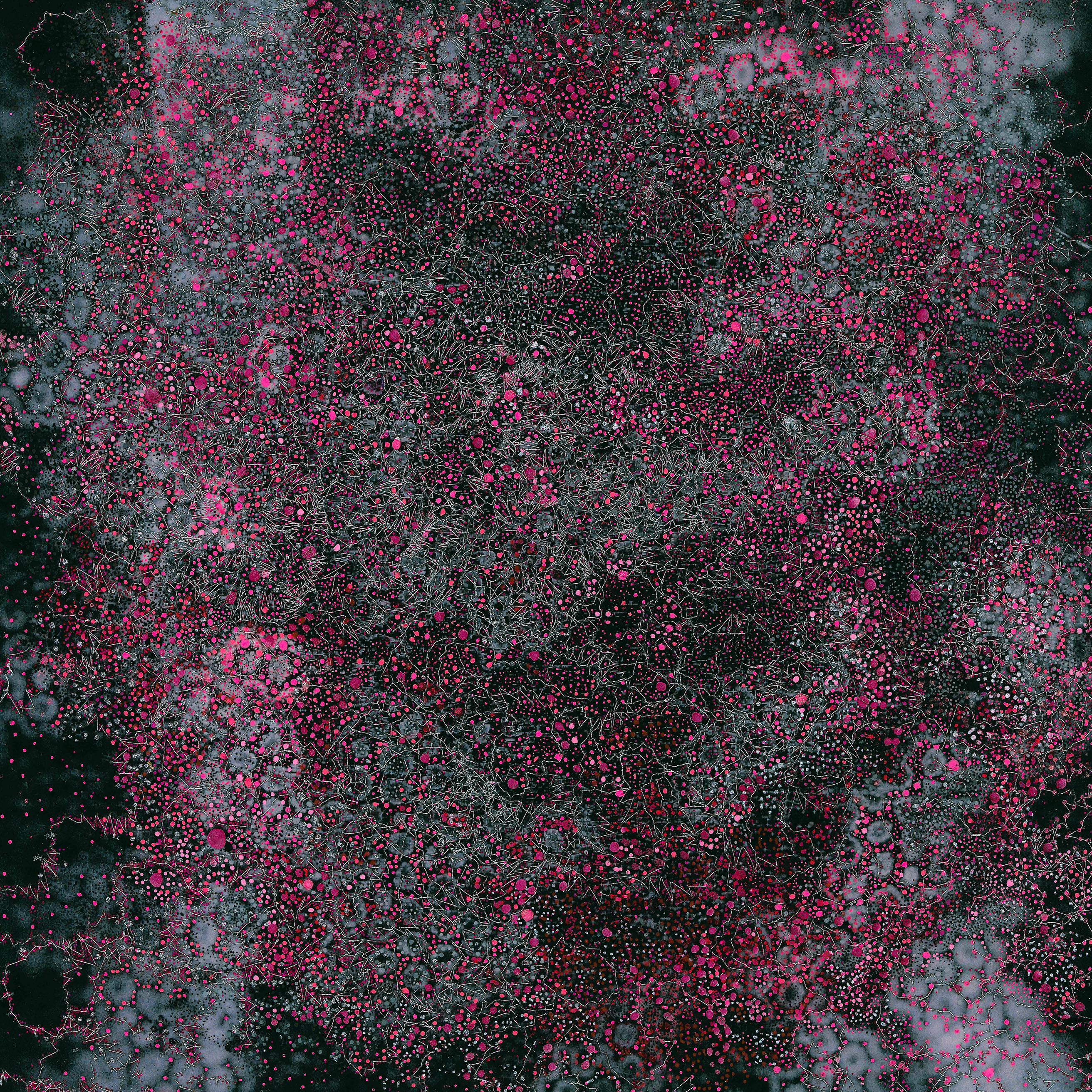
Hear more about ORIGAMI II, the winning artwork of the 2023 contest.